LSBio
IHC-plus™ SMAD3 Antibody (phospho-Ser423/425)

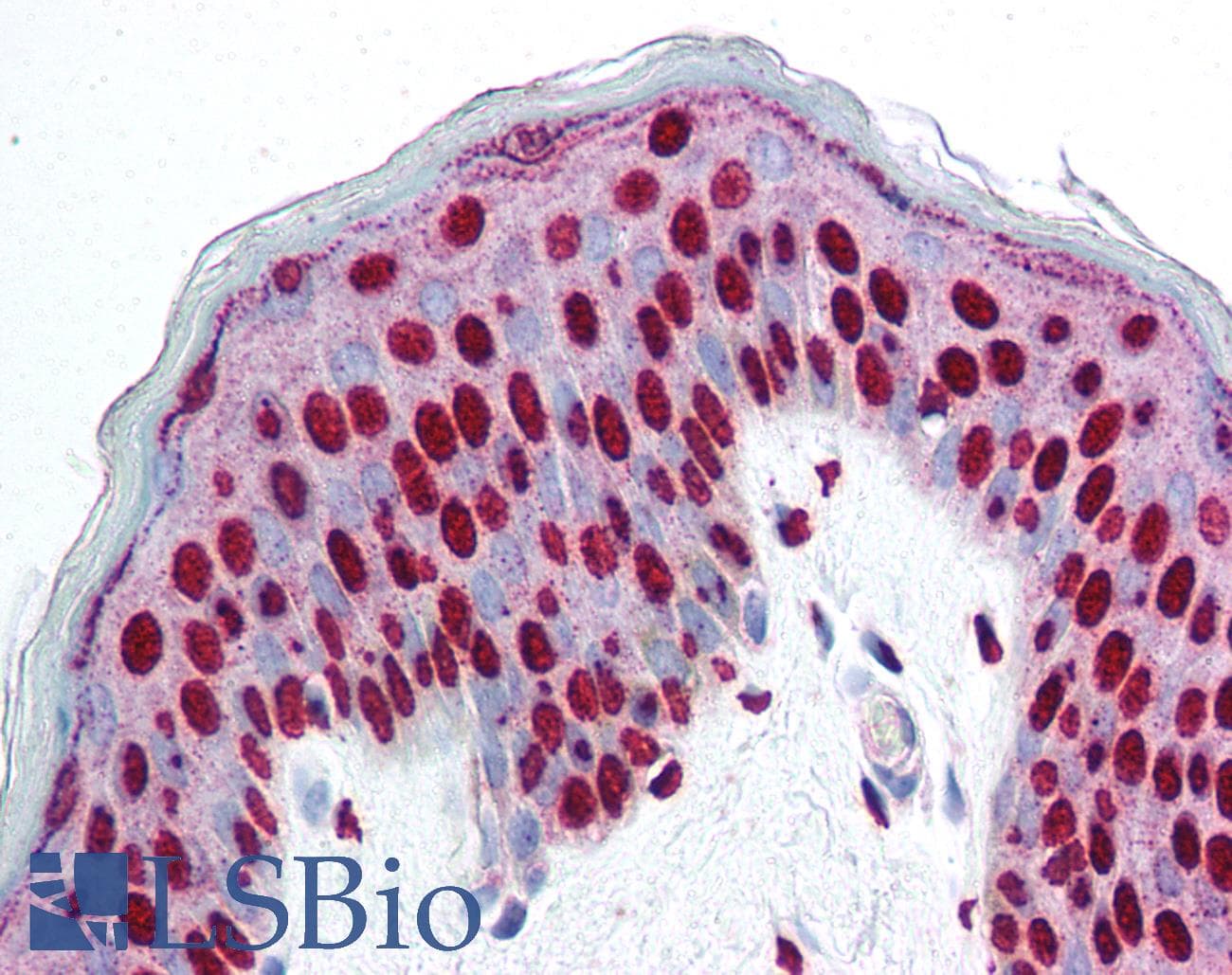
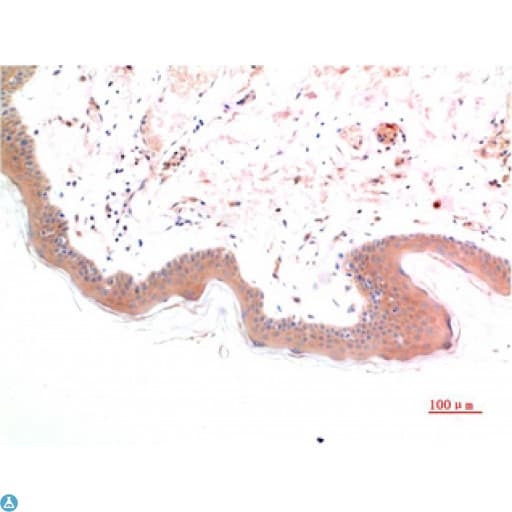
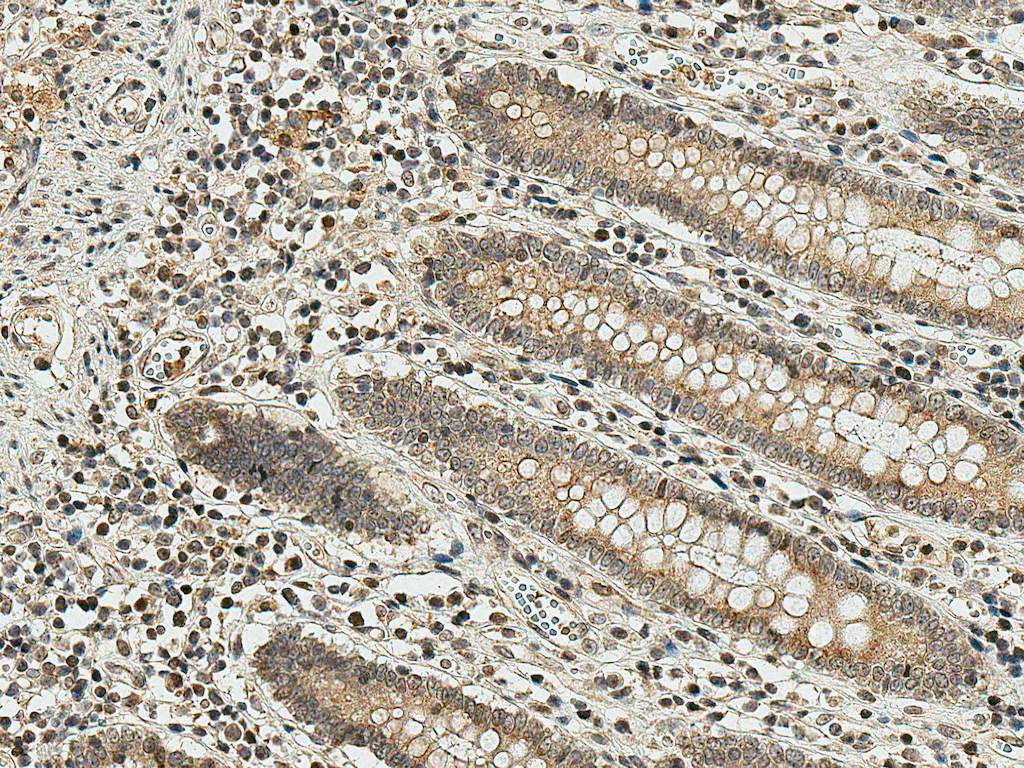
Anti-SMAD3 antibody IHC of human skin. Immunohistochemistry of formalin-fixed, paraffin-embedded tissue after heat-induced antigen retrieval. Antibody concentration 5 ug/ml.

IHC-plus™ SMAD3 Antibody (phospho-Ser423/425)

Primary AntibodyLSBio Guarantee
Antibody:Rabbit Polyclonal
Applications:Enzyme-Linked Immunosorbent Assay, Flow Cytometry, Immunohistochemistry (general), Immunohistochemistry, Paraffin, Western Blot
Reactivity:Bovine, Chicken, Human, Mouse, Pig, Rat, Xenopus, Zebrafish
Format:Liquid
See all SMAD3 antibodies →
$526.00each
Catalog Number: LS-B64-50

For bulk orders or custom formulations:

Request a Quote

Overview

Description
SMAD3 antibody LS-B64 is an unconjugated rabbit polyclonal antibody to SMAD3 (pSer423/425) from human. It is reactive with human, mouse, rat and other species. Validated for ELISA, Flow, IHC and WB. Tested on 20 paraffin-embedded human tissues. Cited in 2 publications.
Application
ELISA, FC, IHC, IHC-P, WB
Reactivity
Bov, Ck, Hu, Ms, Por, Rt, Xen, Zf
Intended Use
Research Use Only
Guarantees
This product carries the LSBio 100% Guarantee.
Category
Antibodies > Primary Antibodies > Polyclonal Antibodies
Alternative Names
HSPC193 | HMAD-3 | HsT17436 | LDS1C | LDS3 | Mad homolog JV15-2 | MAD3 | MADH3 | Mothers against DPP homolog 3 | JV15-2 | SMA- and MAD-related protein 3 | SMAD family member 3 | MAD homolog 3 | SMAD3 | HSMAD3 | Mad protein homolog | SMAD 3
Recommended Dilution: ELISA
1:15000 - 1:30000
Recommended Dilution: IHC-P
2.5 µg/ml
Recommended Dilution: WB
1:2000 - 1:20000
UniProt Number
P84022
SwissProt
P84022

Target

Target
SMAD3
Antigen Species
Human
Specificity
Reactivity occurs against human Smad3 pS423 and pS425 protein and the antibody is specific for the phosphorylated form of the protein. Reactivity with non-phosphorylated human Smad3 is minimal by ELISA and western blot. Expect reactivity against phosphorylated Smad1 and Smad5. Negligible reactivity is seen against other phosphorylated Smad family members. A BLAST analysis was used to suggest cross reactivity with Smad3 from human, Xenopus laevis, Xenopus tropicalis, zebrafish, rat, mouse, swine, bovine and chicken based on 100% sequence homology with the immunogen. Reactivity against homologues from other sources is not known.
Epitope
Reactivity occurs against human Smad3 pS423 and pS425 protein and the antibody is specific for the phosphorylated form of the protein. Reactivity with non-phosphorylated human Smad3 is minimal by ELISA and western blot. Expect reactivity against phosphorylated Smad1 and Smad5. Negligible reactivity is seen against other phosphorylated Smad family members. A BLAST analysis was used to suggest cross reactivity with Smad3 from human, Xenopus laevis, Xenopus tropicalis, zebrafish, rat, mouse, swine, bovine and chicken based on 100% sequence homology with the immunogen. Reactivity against homologues from other sources is not known.
Gene Name
SMAD3

Antibody

Host Species
Rabbit
Clonality
Polyclonal
Isotype
IgG
Origin Species
Human

Immunogen

Immunogen
Anti-SMAD3 pS423pS425 antibody was prepared from whole rabbit serum produced by repeated immunizations with a dual phosphorylated synthetic peptide corresponding to a c-terminal region with Serine 423 and Serine 425 of human SMAD3 protein.
Immunogen Type
Synthetic Peptide (Linear)

Format

Conjugate/Label
Unconjugated
Format
Liquid
Formulation
0.02 M Potassium Phosphate, pH 7.2, 0.15 M NaCl, 0.01% Sodium Azide
Concentration
1.16 mg/mL
Animal Free
No
Carrier-Free
Yes
Preservative
Yes
Purification Method
Affinity Purified

Storage & Handling

Storage Conditions
Short term: store at 4°C. Long term: aliquot and store at -20°C. Avoid freeze-thaw cycles. Store undiluted.
Recommended Storage Buffer
0.02 M Potassium Phosphate, 0.15 M NaCl

Characterization of articular cartilage homeostasis and the mechanism of superior cartilage regeneration of MRL/MpJ mice. Zhenhan Deng, Xueqin Gao, Xuying Sun, Sarah Amra, Aiping Lu, Yan Cui, Holger K Eltzschig, Guanghua Lei, Johnny Huard. FASEB journal : official publication of the Federation of American Societies for Experimental Biology. 2019 Aug;33:8809-8821.

PubMed: 31042406


YAP and TAZ are required for the postnatal development and the maintenance of the structural integrity of the oviduct. Philippe Godin , Mayra Tsoi , Marilène Paquet , Derek Boerboom. Reproduction (Cambridge, England). 2020 Aug;;160:307-318.

PubMed: 32520726

Request SDS/MSDS

To request an SDS/MSDS form for this product, please contact our Technical Support department at: technical@vectorlabs.com.