LSBio
IHC-plus™ Collagen VI Antibody

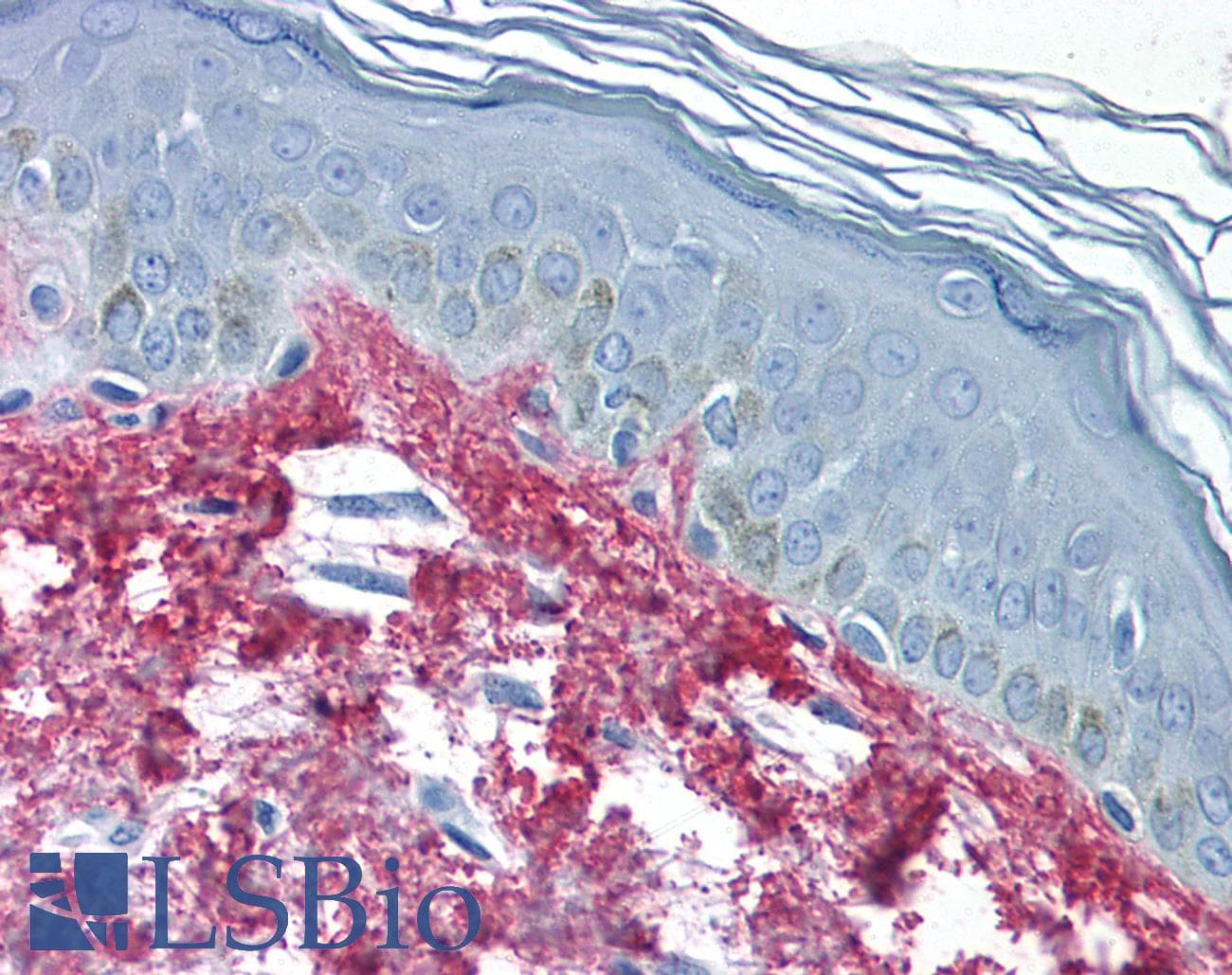
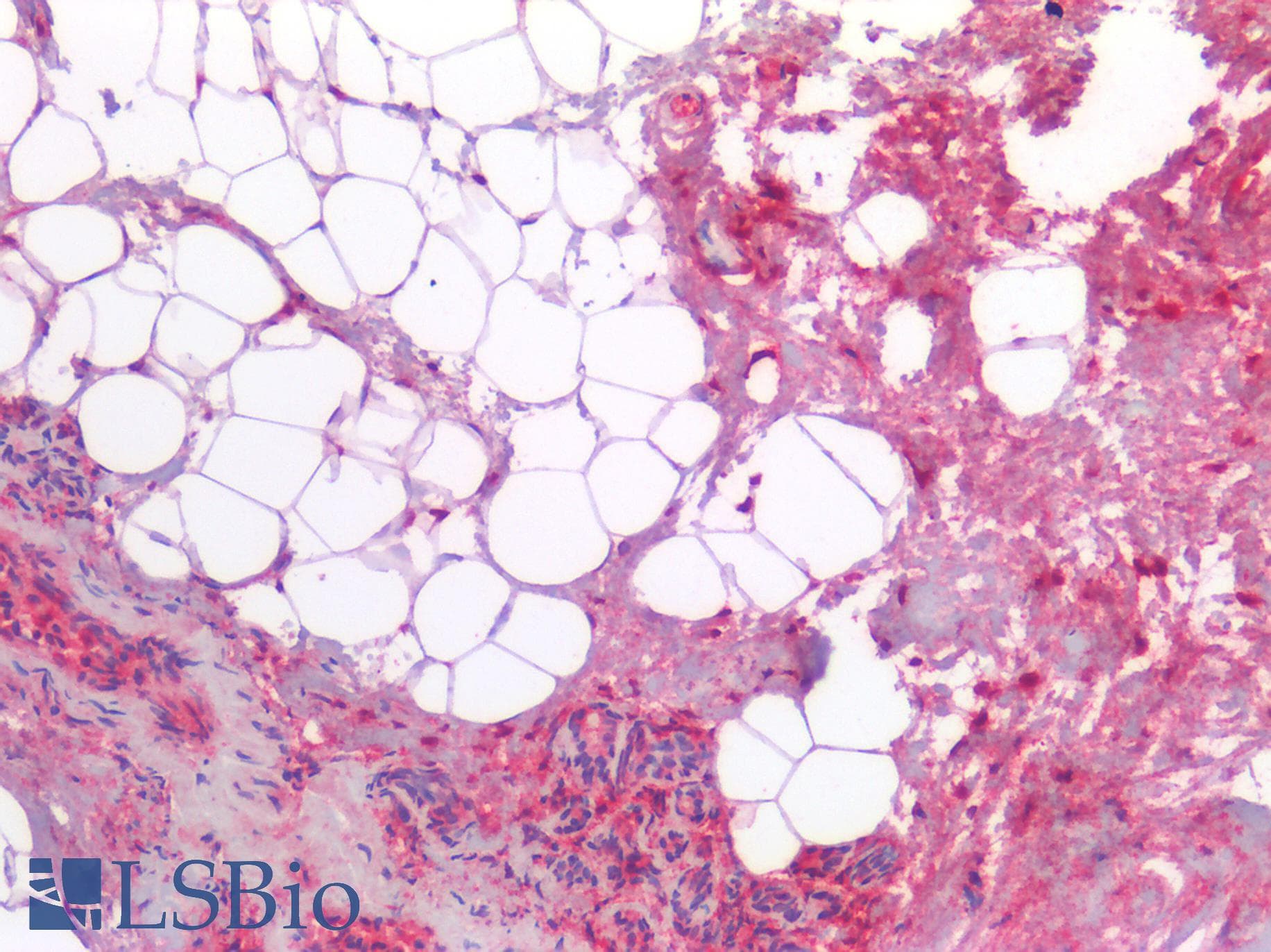
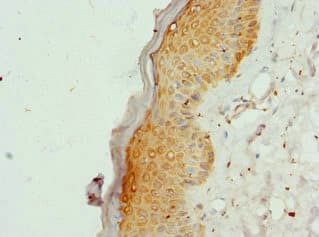
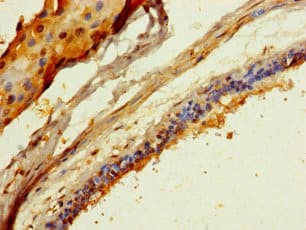
Anti-Collagen I antibody IHC of human skin. Immunohistochemistry of formalin-fixed, paraffin-embedded tissue after heat-induced antigen retrieval. Antibody concentration 5 ug/ml.

IHC-plus™ Collagen VI Antibody

Primary AntibodyLSBio Guarantee
Antibody:Rabbit Polyclonal
Applications:Enzyme-Linked Immunosorbent Assay, Immunohistochemistry (general), Immunohistochemistry, Paraffin, Immunoprecipitation, Other, Western Blot
Reactivity:Bovine, Human, Mammal (Other)
Format:Liquid
See all Collagen VI antibodies →
$709.00each
Catalog Number: LS-B342-50

For bulk orders or custom formulations:

Request a Quote

Overview

Description
Collagen VI antibody LS-B342 is an unconjugated rabbit polyclonal antibody to Collagen VI from mammal. It is reactive with human, bovine and mammal. Validated for ELISA, FLISA, IHC, IP and WB. Cited in 5 publications.
Application
ELISA, IHC, IHC-P, IP, Other, WB
Reactivity
Bov, Hu, Mml
Intended Use
Research Use Only
Guarantees
This product carries the LSBio 100% Guarantee.
Category
Antibodies > Primary Antibodies > Polyclonal Antibodies
Recommended Dilution: ELISA
1:5000 - 1:50000
Recommended Dilution: IHC-P
2.5 µg/ml
Recommended Dilution: IP
1:100
Recommended Dilution: Other
1:100
Recommended Dilution: WB
1:1000 - 1:10000

Target

Target
Collagen VI
Antigen Species
Mammal (Other)
Specificity
Typically negligible cross reactivity against other types of collagens was detected by ELISA against purified standards. Some class-specific anti-collagens may be specific for three-dimensional epitopes which may result in diminished reactivity with denatured collagen or formalin-fixed, paraffin embedded tissues. This antibody reacts with human, bovine, and most mammalian Type I collagens with negligible cross-reactivity with Type II, III, IV, V or VI collagens. Non-specific cross-reaction of anti-collagen antibodies with other human serum proteins or non-collagen extracellular matrix proteins is negligible.
Epitope
Typically negligible cross reactivity against other types of collagens was detected by ELISA against purified standards. Some class-specific anti-collagens may be specific for three-dimensional epitopes which may result in diminished reactivity with denatured collagen or formalin-fixed, paraffin embedded tissues. This antibody reacts with human, bovine, and most mammalian Type I collagens with negligible cross-reactivity with Type II, III, IV, V or VI collagens. Non-specific cross-reaction of anti-collagen antibodies with other human serum proteins or non-collagen extracellular matrix proteins is negligible.

Antibody

Host Species
Rabbit
Clonality
Polyclonal

Immunogen

Immunogen
Collagen Type I from human and bovine placenta.

Format

Conjugate/Label
Unconjugated
Format
Liquid
Formulation
0.02 M Potassium Phosphate, pH 7.2, 0.15 M NaCl, 0.01% Sodium Azide
Concentration
1 mg/mL
Animal Free
No
Carrier-Free
Yes
Preservative
Yes
Purification Method
Affinity Purified

Storage & Handling

Storage Conditions
Short term: store at 4°C. Long term: store at -20°C. Avoid freeze-thaw cycles.
Recommended Storage Buffer
0.02 M Potassium Phosphate, 0.15 M NaCl

Inhibition of collagen alpha 1(I) expression by the 5' stem-loop as a molecular decoy. Stefanovic B, Schnabl B, Brenner DA. The Journal of biological chemistry. 2002;277:18229-37.

PubMed: 11889120


Bone marrow-derived progenitor cells in pulmonary fibrosis. Hashimoto N, Jin H, Liu T, Chensue SW, Phan SH. The Journal of clinical investigation. 2004;113:243-52.

PubMed: 14722616 · PMC: PMC310750


Adipogenic transcriptional regulation of hepatic stellate cells. She H, Xiong S, Hazra S, Tsukamoto H. The Journal of biological chemistry. 2005;280:4959-67.

PubMed: 15537655


Hepatic steatosis, fibrosis, and cancer in elderly cadavers. Mak KM, Kwong AJ, Chu E, Hoo NM. Anatomical record (Hoboken, N.J. : 2007). 2012;295:40-50.

PubMed: 22139908


Subtype-Specific Tumor-Associated Fibroblasts Contribute to the Pathogenesis of Uterine Leiomyoma. Wu X, Serna VA, Thomas J, Qiang W, Blumenfeld ML, Kurita T. Cancer research. 2017 December;77:6891-6901.

PubMed: 29055020 · PMC: PMC6015476

Request SDS/MSDS

To request an SDS/MSDS form for this product, please contact our Technical Support department at: technical@vectorlabs.com.