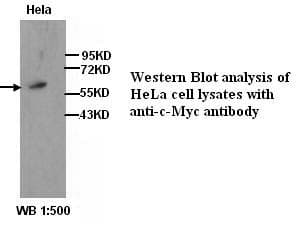
MYC / c-Myc Antibody
Catalog Number: LS-C137025-100
100 µL (1 mg/mL) / $339.00
Antibody: Rabbit Polyclonal
Applications: Enzyme-Linked Immunosorbent Assay, Immunohistochemistry (general), Western Blot
Reactivity: Human, Mouse, Rat
Format: Liquid

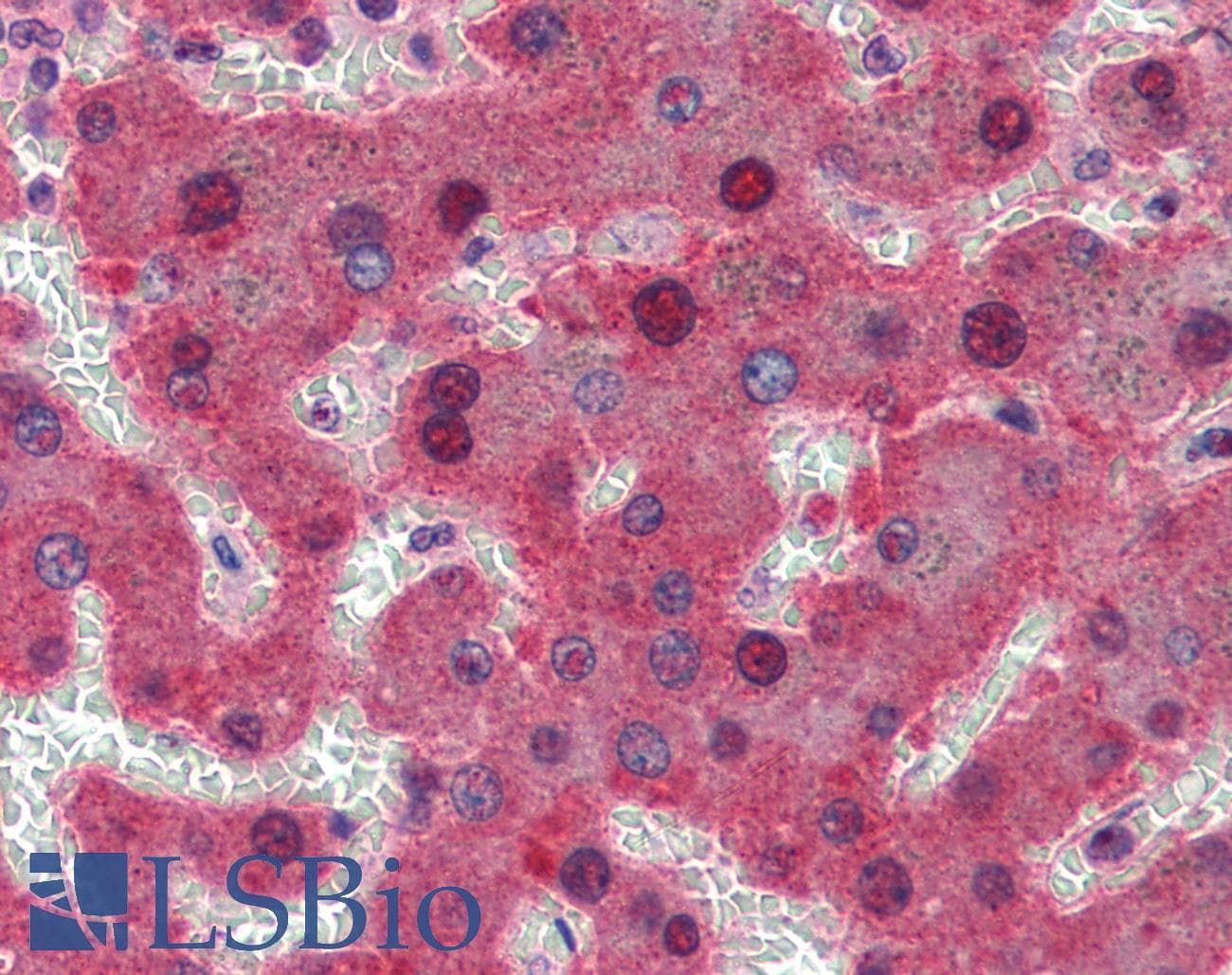
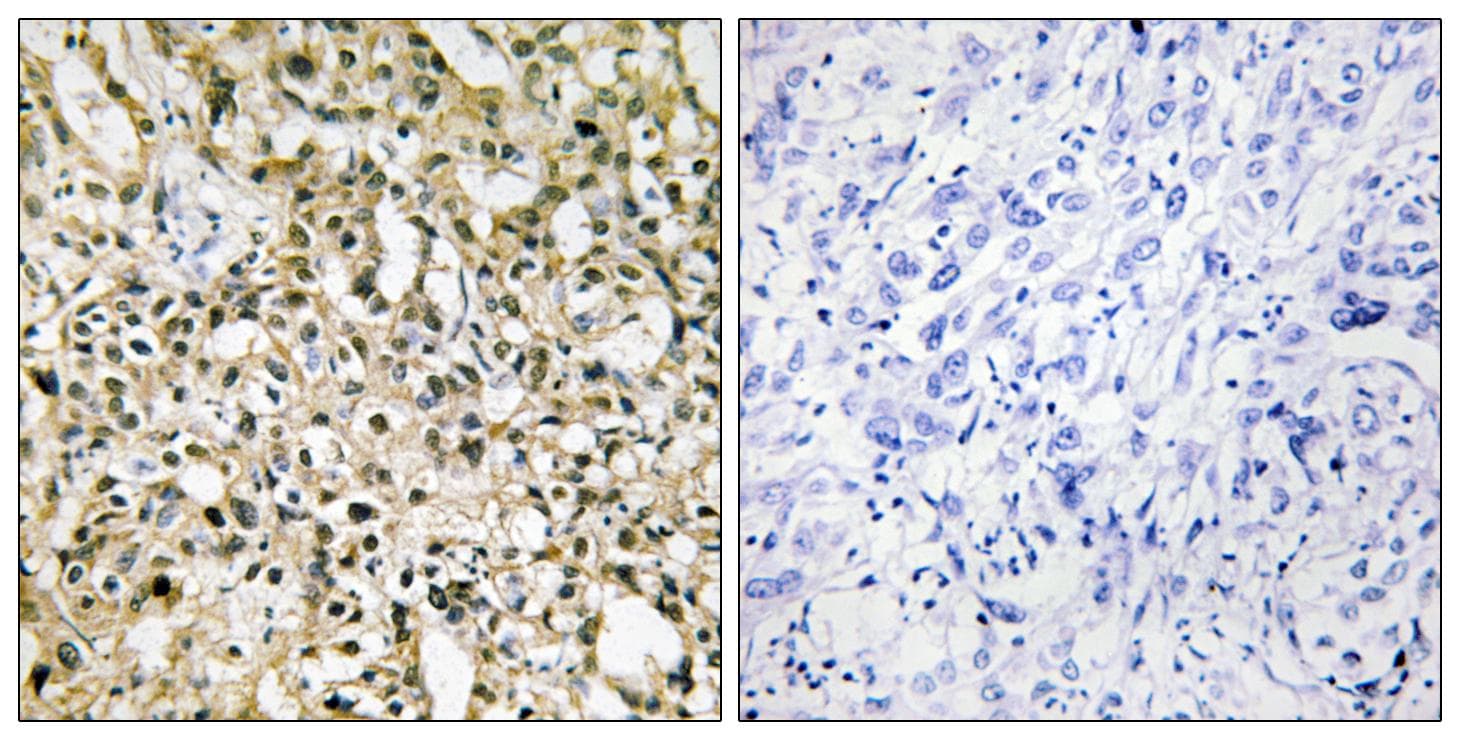
Anti-MYC / c-Myc antibody IHC of human liver. Immunohistochemistry of formalin-fixed, paraffin-embedded tissue after heat-induced antigen retrieval. Antibody concentration 10 ug/ml.
| Antibody: | Mouse Monoclonal |
| Applications: | Enzyme-Linked Immunosorbent Assay, Flow Cytometry, Immunofluorescence, Immunohistochemistry (general), Immunohistochemistry, Paraffin, Immunoprecipitation, Western Blot |
| Reactivity: | Human |
| Format: | Liquid |
For bulk orders or custom formulations:
Request a Quote| Application | Dilution |
|---|---|
| IHC-P | 10 µg/ml |
Epstein-Barr virus latent membrane protein 1 induces cancer stem/progenitor-like cells in nasopharyngeal epithelial cell lines. Kondo S, Wakisaka N, Muramatsu M, Zen Y, Endo K, Murono S, Sugimoto H, Yamaoka S, Pagano JS, Yoshizaki T. Journal of virology. 2011;85:11255-64.
PubMed: 21849440 · PMC: PMC3194961
Human and mouse ZFY genes produce a conserved testis-specific transcript encoding a zinc finger protein with a short acidic domain and modified transactivation potential. Decarpentrie F, Vernet N, Mahadevaiah SK, Longepied G, Streichemberger E, Aknin-Seifer I, Ojarikre OA, Burgoyne PS, Metzler-Guillemain C, Mitchell MJ. Human molecular genetics. 2012;21:2631-45.
PubMed: 22407129 · PMC: PMC3363334
Autoregulation of MARCH1 expression by dimerization and autoubiquitination. Bourgeois-Daigneault MC, Thibodeau J. Journal of immunology (Baltimore, Md. : 1950). 2012;188:4959-70.
PubMed: 22508929
Staphylococcus aureus adherence to Candida albicans hyphae is mediated by the hyphal adhesin Als3p. Peters BM, Ovchinnikova ES, Krom BP, Schlecht LM, Zhou H, Hoyer LL, Busscher HJ, van der Mei HC, Jabra-Rizk MA, Shirtliff ME. Microbiology (Reading, England). 2012;158:2975-86.
PubMed: 22918893
Role of poly(ADP-ribose) polymerase-1 in the removal of UV-induced DNA lesions by nucleotide excision repair. Robu M, Shah RG, Petitclerc N, Brind'Amour J, Kandan-Kulangara F, Shah GM. Proceedings of the National Academy of Sciences of the United States of America. 2013;110:1658-63.
PubMed: 23319653 · PMC: PMC3562836
Catalog Number: LS-C137025-100
100 µL (1 mg/mL) / $339.00
Antibody: Rabbit Polyclonal
Applications: Enzyme-Linked Immunosorbent Assay, Immunohistochemistry (general), Western Blot
Reactivity: Human, Mouse, Rat
Format: Liquid
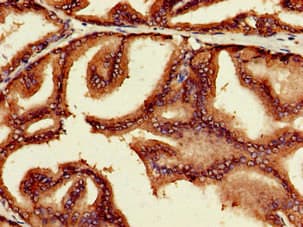
Catalog Number: LS-C394787
2 sizes / from $300.00
Antibody: Rabbit Polyclonal
Applications: Enzyme-Linked Immunosorbent Assay
Reactivity: Human
Format: Liquid
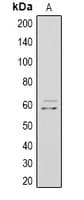
Catalog Number: LS-C413642
4 sizes / from $272.00
Antibody: Rabbit Polyclonal
Applications: Immunohistochemistry (general), Immunohistochemistry, Paraffin, Western Blot
Reactivity: Human
Format: Liquid
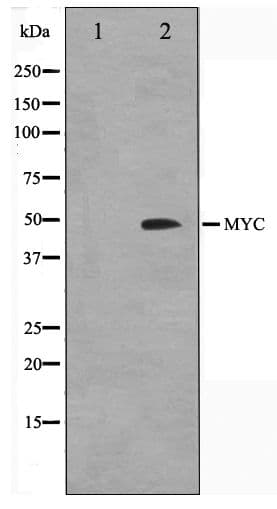
Catalog Number: LS-C416049
2 sizes / from $312.00
Antibody: Rabbit Polyclonal
Applications: Immunohistochemistry (general), Western Blot
Reactivity: Human, Mouse, Rat
Format: Liquid
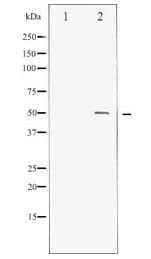
Catalog Number: LS-C417353
2 sizes / from $312.00
Antibody: Rabbit Polyclonal
Applications: Immunocytochemistry, Immunofluorescence, Immunohistochemistry (general), Western Blot
Reactivity: Human, Mouse, Rat
Format: Liquid

Catalog Number: LS-C746964
2 sizes / from $281.00
Antibody: Rabbit Polyclonal
Applications: Immunohistochemistry (general)
Reactivity: Human, Mouse, Rat
Format: Liquid
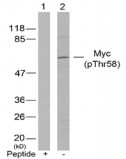
Catalog Number: LS-C760166-100
100 µL / $477.00
Antibody: Rabbit Polyclonal
Applications: Immunohistochemistry (general), Western Blot
Reactivity: Human, Mouse, Rat
Format: Liquid
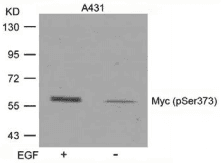
Catalog Number: LS-C760169-100
100 µL / $477.00
Antibody: Rabbit Polyclonal
Applications: Immunohistochemistry (general), Western Blot
Reactivity: Human, Mouse, Rat
Format: Liquid
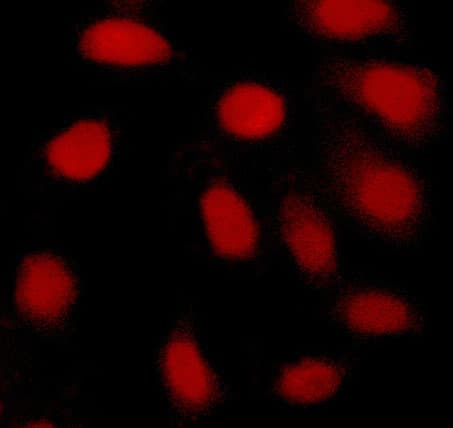
Catalog Number: LS-C801541
2 sizes / from $288.00
Antibody: Rabbit Polyclonal
Applications: Enzyme-Linked Immunosorbent Assay, Immunofluorescence, Immunohistochemistry (general), Western Blot
Reactivity: Human, Mouse, Rat
Format: Liquid
Catalog Number: LS-C83255-100
100 µg / $571.00
Antibody: Goat Polyclonal
Applications: Immunoprecipitation
Format: Liquid
Catalog Number: LS-C136227-500
500 µg / $401.00
Antibody: Sheep Polyclonal
Applications: Immunohistochemistry (general), Western Blot
Reactivity: Human
Format: Lyophilized
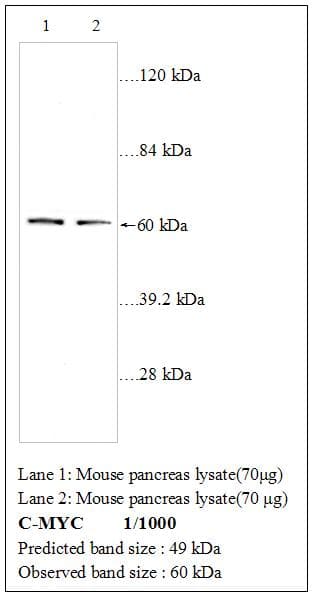
Catalog Number: LS-C137418-100
100 µL (1 mg/mL) / $295.00
Antibody: Rabbit Polyclonal
Applications: Western Blot
Reactivity: Human, Mouse, Rat
Format: Liquid
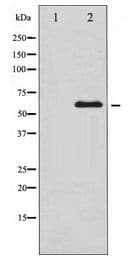
Catalog Number: LS-C417354
2 sizes / from $312.00
Antibody: Rabbit Polyclonal
Applications: Immunohistochemistry (general), Western Blot
Reactivity: Human, Mouse, Rat
Format: Liquid
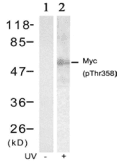
Catalog Number: LS-C760168-100
100 µL / $477.00
Antibody: Rabbit Polyclonal
Applications: Immunofluorescence, Immunohistochemistry (general), Western Blot
Reactivity: Human
Format: Liquid
Catalog Number: LS-C822547-100
100 µg / $365.00
Antibody: Rabbit Polyclonal
Applications: Enzyme-Linked Immunosorbent Assay, Immunohistochemistry (general), Western Blot
Reactivity: Human, Mouse, Rat
Format: Liquid
Catalog Number: LS-C176133
2 sizes / from $328.00
Antibody: Rabbit Polyclonal
Applications: Immunohistochemistry (general), Immunohistochemistry, Paraffin, Western Blot
Reactivity: Human, Mouse, Rat
Format: Liquid
Catalog Number: LS-C394788
2 sizes / from $300.00
Antibody: Rabbit Polyclonal
Applications: Enzyme-Linked Immunosorbent Assay
Reactivity: Human
Format: Liquid
Catalog Number: LS-C774870-100
100 µg (1 mg/mL) / $485.00
Antibody: Rabbit Polyclonal
Applications: Western Blot
Reactivity: Human
Format: Liquid
Catalog Number: LS-C774877-100
100 µg (1 mg/mL) / $482.00
Antibody: Rabbit Polyclonal
Applications: Western Blot
Reactivity: Human
Format: Liquid
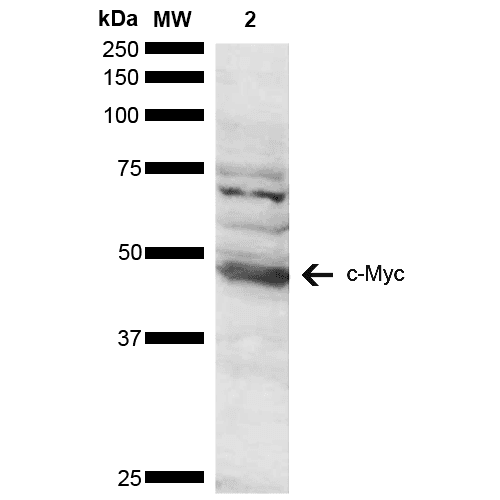
Catalog Number: LS-C774885-100
100 µg (1 mg/mL) / $488.00
Antibody: Rabbit Polyclonal
Applications: Immunohistochemistry (general), Western Blot
Reactivity: Human
Format: Liquid