
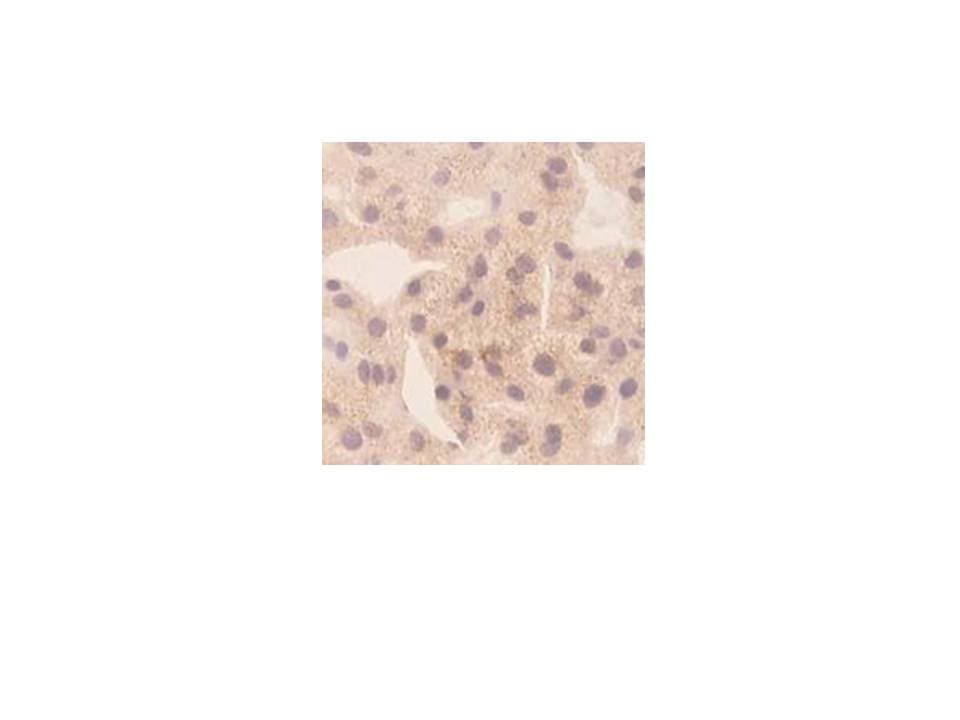
CXCL10 / IP-10 Antibody (clone 1)
Primary AntibodyLSBio Guarantee
| Antibody: | Mouse Monoclonal |
| Applications: | Enzyme-Linked Immunosorbent Assay, Immunohistochemistry (general), Western Blot |
| Reactivity: | Human |
| Format: | Liquid |
$454.00each
Catalog Number: LS-C137619-100
Catalog Number: LS-C137619
For bulk orders or custom formulations:
Request a QuoteOverview
- Description
- IP-10 antibody LS-C137619 is an unconjugated mouse monoclonal antibody to human IP-10 (CXCL10). Validated for ELISA, IHC and WB. Cited in 1 publication.
- Application
- ELISA, IHC, WB
- Reactivity
- Hu
- Intended Use
- Research Use Only
- Guarantees
- This antibody carries the LSBio 100% Guarantee. ✓
- Category
- Antibodies > Primary Antibodies > Monoclonal Antibodies
- Alternative Names
- C-X-C motif chemokine 10 | CXCL10 | Gamma-IP10 | IP-10 | Gamma IP10 | GIP-10 | Mob-1 | Small-inducible cytokine B10 | Crg-2 | IFI10 | INP10 | SCYB10
- UniProt Number
- P02778
- NCBI GenBank
- NM_001565 | NP_001556.2
- SwissProt
- P02778
Recommended Dilution
| Application | Dilution |
|---|---|
| IHC | 1:10 |
| WB | 1:1000 |
Target
- Target
- Human CXCL10 / IP-10
- Antigen Species
- Human
- Epitope
- Anti-CXCL10 recognizes recombinant protein CXCL10.
- Gene Name
- CXCL10
Antibody
- Host Species
- Mouse
- Clonality
- Monoclonal
- Clone
- 1
- Isotype
- IgG1
Immunogen
- Immunogen
- Recombinant protein corresponding to full length CXCL10
- Immunogen Type
- Full-Length Recombinant Protein
Format
- Conjugate/Label
- Unconjugated
- Format
- Liquid
- Formulation
- Citrate-Tris-HCl buffer, pH 7.0, 0.02% Proclin 300
- Concentration
- 1 mg/mL
- Volume
- 100 Microliter
- Preservative
- Yes
- Purification Method
- Affinity Purified
Storage & Handling
- Storage Conditions
- Short term: store at 4°C. Long term: aliquot and store at -20°C. Avoid freeze-thaw cycles. Store undiluted.
- Recommended Storage Buffer
- tris-hcl
Multiple halo nevi associated with Turner syndrome. Emi Yamazaki, Moyuka Irimada, Rui Sasaki, Kenichiro Tsuchiyama, Kenshi Yamasaki, Setsuya Aiba. The Journal of dermatology. 2021 Janurary;48:e11-e12. PubMed: 33063368